
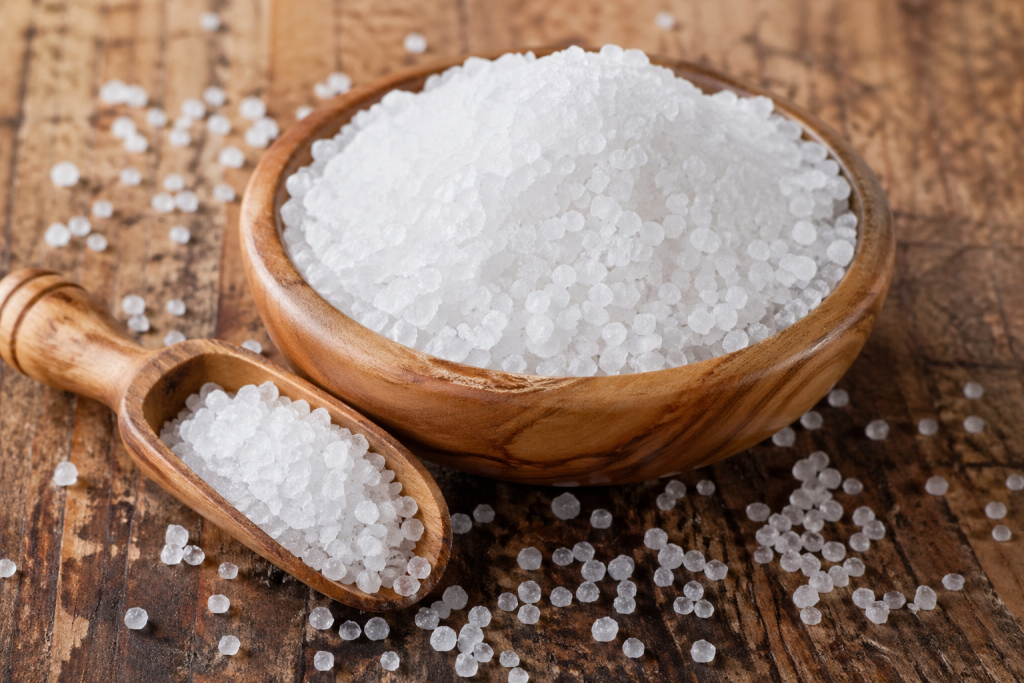
Salt is one of the most practical long-term food storage items because it is inexpensive, shelf-stable, and useful for both nutrition and food preservation.
What Food Storage Salt Is
Food storage salt usually refers to plain edible salt kept in bulk for emergency supplies, homesteading, or pantry reserves. Common types include:
- Table Salt – Fine grain, often iodized. Good for everyday cooking.
- Non-Iodized Salt – Preferred for canning, pickling, fermenting, and long-term storage.
- Sea Salt – Mineral-rich, coarse or fine grain.
- Kosher Salt – Larger flakes, ideal for cooking and curing.
- Canning/Pickling Salt – Pure salt with no additives, dissolves cleanly.
Why Store Salt
Salt is valuable because it can:
- Season bland stored foods like rice, beans, wheat, oats, potatoes
- Help preserve meat, fish, vegetables, and cheese
- Support fermentation (sauerkraut, pickles, kimchi)
- Replace electrolytes in hot weather
- Be used in cleaning and sanitation tasks
- Serve as barter value in emergencies
Shelf Life
Salt does not spoil if kept dry. It can last indefinitely.
Best Storage Method
Store in:
- Airtight buckets with gasket lids
- Mylar bags inside buckets
- Glass jars
- Heavy plastic containers
Keep in a cool, dry place. Moisture is the main enemy.
How Much to Store
General preparedness guideline:
- 5–10 lbs per person for seasoning/basic use
- 25+ lbs per household if preserving food, curing meat, livestock use, or barter
Best Type for Preparedness
A balanced storage plan:
- Fine iodized table salt (nutrition + daily use)
- Non-iodized salt (preservation)
- Coarse salt (curing / specialty uses)
Practical Example
A family of 4 might store:
- 10 lbs iodized salt
- 25 lbs non-iodized salt
- 10 lbs coarse kosher/pickling salt
Important Note
Salt is essential, but too much can be harmful. Use reasonably, especially for people with blood pressure or kidney concerns.
My Recommendation for You
Given your interest in self-reliance and long-term systems, I’d store 50 lbs total mixed salt types as a strong baseline household reserve.